
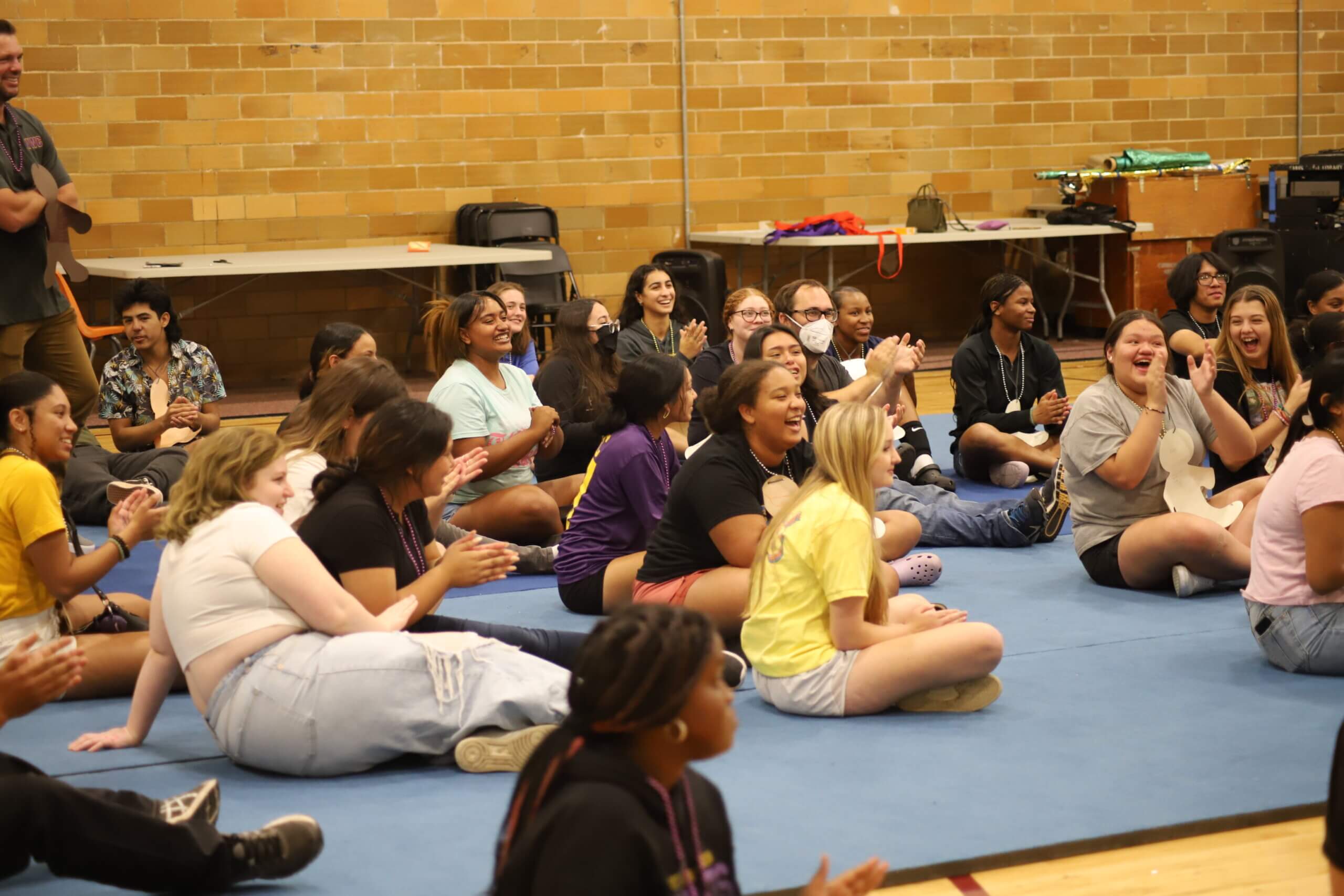
Schools have become increasingly thoughtful about orientation. Many now offer summer programming, building tours, student-led activities, freshman academies, transition days, and other experiences designed to make the start of middle/high school less overwhelming.
These experiences matter. But they also raise an important question:
What happens after orientation?
A student can learn where the cafeteria is in August and still struggle to understand academic expectations in October. They can meet their counselor during orientation and still not know whom to approach when course demands rise. They can hear about CTE, IB, athletics, clubs, and career pathways during a presentation without yet understanding which opportunities might matter to them, or how to access them.
The challenge is not that schools need a better first day. It is that transition is too complex to be accomplished in a day.
If we want students to successfully navigate the move into high school, orientation should be viewed as one component of a broader transition system—one that begins before students arrive and continues as their academic, social, and developmental needs change throughout the year.
Move From an Orientation Calendar to a Transition Continuum
Most schools can easily identify when orientation occurs. It is much harder to identify where the transition process begins and ends.
A stronger approach starts by mapping the entire student journey. What information do students need while they are still in 5th or eighth grade? What do they need immediately before entering high school? What becomes relevant after their first grading period? When do pathway decisions begin? When are students expected to understand credits, graduation requirements, extracurricular opportunities, or course registration?
The answers reveal something important: students cannot meaningfully absorb information before they have a reason to use it.
An eighth grader touring a high school in the spring may need reassurance about what the building and daily schedule will feel like. In September, that same student may need help understanding academic expectations. By November, grades and attendance may require attention. In January, conversations about course selection, pathways, and opportunities for the following year become more meaningful.
A transition system sequences support around those moments rather than attempting to communicate everything at once.
Build Better Handoffs Between Schools
Some of the most important transition work happens before students ever enter the high school building.
Feeder schools know their students. They know which young people have emerged as leaders, which students have struggled with attendance, which families may need additional communication, which students thrive with structure, and which students have interests or strengths that may not be immediately visible on a transcript.
High schools, meanwhile, know the opportunities students are about to encounter.
A strong transition process creates better connections between those two bodies of knowledge. Spring visits, student-led pathway presentations, counselor collaboration, family communication, and intentional feeder-school partnerships can help incoming students arrive with greater familiarity while helping high schools prepare more intentionally for the students they are receiving.
This is particularly important when schools are investing in Career Academies, CTE, IB, dual enrollment, or other specialized pathways. Transition is not simply about helping students enter the building; it is also about helping them understand the opportunities the building contains.
Use Students as Part of the Transition Infrastructure
Students can play a particularly valuable role in creating continuity between transition activities.
The upperclassman who leads an 5th-grade visit in the spring can be present again at summer orientation. That same student can reconnect with younger students during the first grading period and later help them understand course registration, pathways, activities, or academic expectations.
This creates something schools often struggle to produce through isolated events: continuity.
Near-peer mentors do not replace counselors, teachers, administrators, or other student-support professionals. Instead, they can extend the reach of those systems by helping younger students understand information, navigate processes, identify questions, and connect with the appropriate adult when additional support is needed.
The goal is not to turn students into counselors. It is to recognize that students can be effective navigators of a school environment they recently learned to navigate themselves.
Design Transition Around Predictable Moments of Need
A yearlong transition system does not require constant programming. In fact, some of the strongest systems may be relatively simple. What matters is identifying the moments when students are most likely to need additional guidance and intentionally placing support around them.
The first weeks of school are one such moment, but they are not the only one. The first progress report, the end of the first quarter, course registration, pathway selection, semester changes, testing periods, and preparation for sophomore year all create natural opportunities for targeted transition support.
This allows mentoring conversations and student supports to become increasingly relevant. Instead of repeating generic messages about “being successful in high school,” schools can respond to what students are actually experiencing at that point in the year.
By doing so, transition becomes less about delivering information and more about providing the right information, relationship, or resource at the moment it becomes useful.
Measure More Than Whether Students Attended Orientation
Thinking about transition as a system also changes what schools can monitor.
Attendance at orientation tells us whether a student participated in an event. It does not necessarily tell us whether the transition was successful.
Schools might instead examine indicators across the first year: early attendance patterns, course failures, credit accumulation, participation in extracurricular activities, pathway enrollment, student help-seeking, sense of connection, or the percentage of students who can identify an adult or peer they would approach for support.
The specific measures will vary by school, but the shift in thinking is important. If transition is a process, its success should be visible beyond the first day.
That also creates opportunities to improve the system. If students consistently struggle at a particular point in the year, schools can ask what additional information, connection, or intervention might be useful at that moment rather than waiting until the following summer to redesign orientation.
Transition Should Eventually Become Leadership
There is another benefit to thinking beyond freshman orientation: the students receiving support today can become part of the transition infrastructure tomorrow.
An eighth grader enters high school as a new student. Over time, that student learns the systems, expectations, opportunities, and culture of the school. As an upperclassman, they can then use that knowledge to support the next incoming class.
A mentee becomes a mentor. A mentor may become an executive student leader responsible for training or supporting other mentors. Eventually, students are not simply navigating the system; they are helping strengthen it.
This creates a cycle in which transition and leadership development reinforce one another. Institutional knowledge is not held exclusively by adults. Students become active contributors to how their school welcomes, prepares, and develops the students who come after them.
The Question Isn’t Whether Orientation Worked
A successful orientation is worth celebrating. But by October, the more useful question is no longer whether students enjoyed their first day.
It is whether the systems introduced during that first day are still working for them.
Do students know how to access help? Are they successfully navigating academic expectations? Do they understand the opportunities available to them? Are emerging attendance or academic concerns being identified early? Are students prepared for the next decisions they will be asked to make? And are the adults and student leaders who welcomed them initially still connected to the process?
These are transition questions, not orientation questions.
Orientation is an event. Transition is a process. When schools design accordingly, the goal shifts from simply welcoming students into high school to intentionally helping them learn how to navigate it, take advantage of it, and eventually contribute to it themselves.