
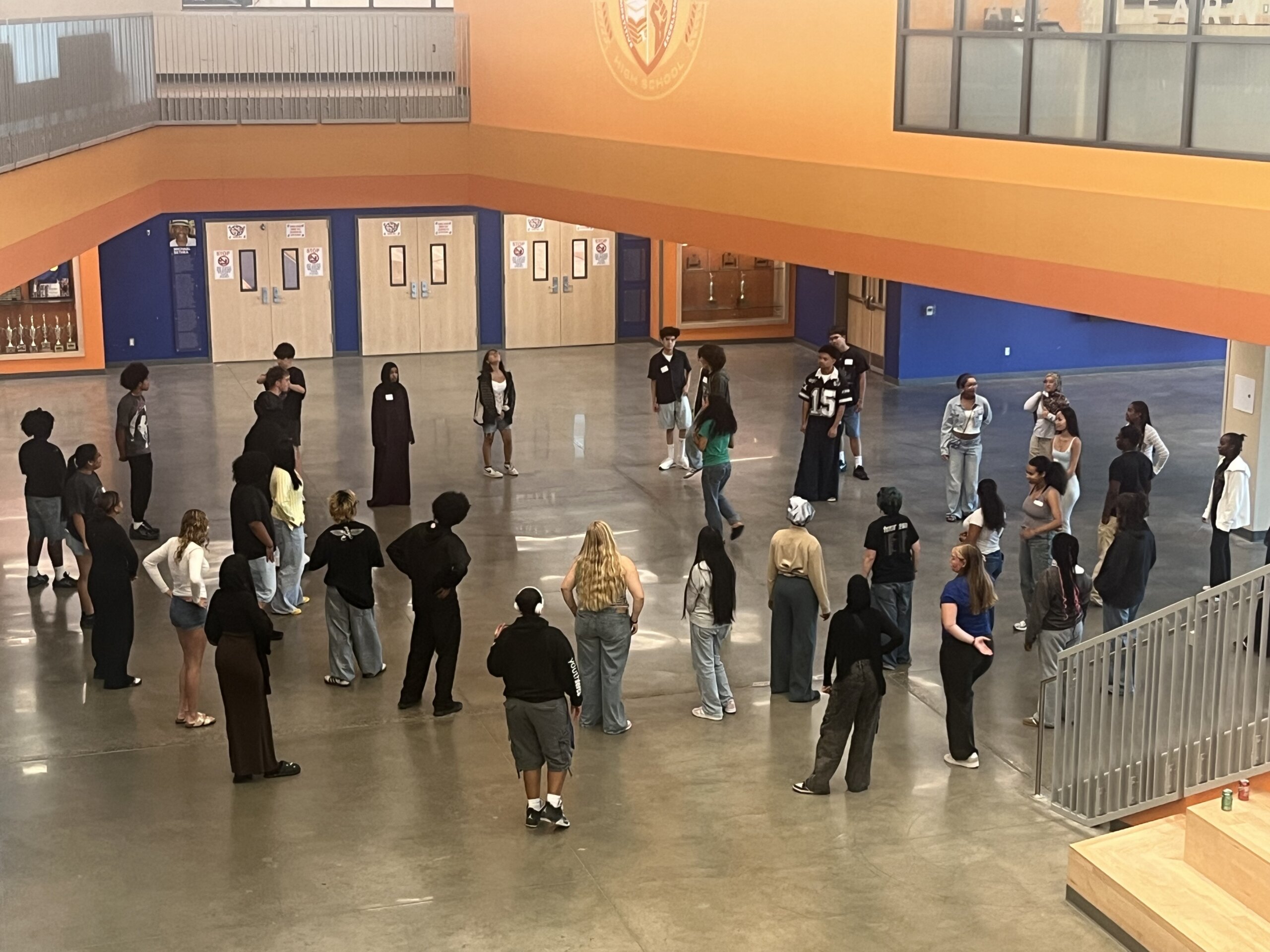
What does it look like when a school’s vision for students isn’t simply written on a wall, included in a handbook, or introduced during a lesson, but becomes something students are actually asked to practice?
At Rainier Beach High School in Seattle, Washington, that question is taking on new meaning. Rainier Beach is an International Baccalaureate school with a vision of preparing scholars for college, career, and lifelong learning. The IB Learner Profile provides a powerful framework for that vision, calling students to grow as inquirers, thinkers, communicators, principled and open-minded people, risk-takers, reflective learners, and caring, knowledgeable, balanced human beings.
Those are powerful aspirations, but perhaps the bigger question for any school is: Where do students get to practice becoming those people? Where do they have opportunities not just to talk about communication, but to communicate? Not just to learn about empathy, but to become responsible for building a relationship with another person? Not just to study leadership, but to have someone counting on them to lead?
This year, Rainier Beach is creating another space for exactly that.
Through a new partnership with Ignite, students will be trained to serve as near-peer mentors, supporting younger students while developing and demonstrating many of the same competencies embedded within the IB Learner Profile. In other words, the Learner Profile doesn’t have to remain something students learn about. It becomes something they live.
An Investment in the Whole Student
The work at Rainier Beach is happening within a larger conversation taking place across Seattle about what young people need in order to thrive. Seattle has made a significant public commitment to children and young people through investments that extend beyond traditional academics to include mentoring, health and wellness, enrichment, college access, career preparation, and pathways to credentials and the trades.
That breadth matters because it reflects something educators increasingly recognize: preparing young people for the future requires us to educate and support them as whole human beings. Academic rigor matters, and so do relationships. Career preparation matters, and so does belonging. Credentials matter, and so do communication, empathy, adaptability, reflection, collaboration, and the ability to build meaningful relationships with others.
The strongest school systems don’t have to choose between those priorities. Instead, they can intentionally create experiences where those priorities reinforce one another. That is part of what makes the opportunity at Rainier Beach so exciting.
From Learner Profile to Lived Experience
Consider what happens when a student becomes responsible for mentoring younger peers. Being a communicatorsuddenly means more than presenting in front of a classroom; it means learning to listen, ask meaningful questions, explain an idea clearly, and recognize when another person isn’t understanding you. Being caring becomes more than an aspiration; it means noticing when a mentee is disengaged, remembering something they shared last month, and creating an environment where another student feels seen.
Being reflective means asking, How did I show up? What worked? What didn’t? What will I do differently next time?Being a risk-taker might mean facilitating a group for the first time, approaching someone you don’t know, or stepping into a leadership role you never imagined yourself holding. Being principled means recognizing that leadership carries responsibility, that relationships require trust, and that influence should be used intentionally.
And being a thinker means solving the unpredictable human problems that come with leadership: How do I engage someone who doesn’t want to participate? How do I respond when a group gets off track? When should I solve something myself, and when should I ask an adult for help?
These aren’t hypothetical leadership skills. They are leadership in practice.
Expanding Our Definition of Who Gets to Lead
Schools usually know who their traditional student leaders are. They’re the students with titles, the team captains, student government officers, honor society members, and students who already know how to navigate school successfully. Those students can be phenomenal mentors, but they aren’t the only students with influence.
Leadership exists throughout a school community, sometimes in places adults don’t immediately recognize. There are students whose peers listen when they speak, students who have overcome difficult transitions themselves, and students who haven’t always made the right decision but have learned something meaningful from it. There are students who know what it feels like to struggle academically, students who can walk into a room and make people laugh, and students who naturally notice when someone is sitting alone.
Those experiences matter in mentoring. If we truly believe every young person has the capacity to lead, then leadership opportunities should give more young people the chance to discover what their influence can become. A freshman should be able to look at the mentors around them and find someone whose story feels familiar, someone who makes leadership feel possible.
Turning Influence Into Skill
Students are already influencing students. That isn’t something schools create. It happens in hallways, cafeterias, classrooms, group chats, athletics, clubs, neighborhoods, and friendships every single day. The opportunity is to help students understand that influence and develop the skills to use it intentionally.
At Rainier Beach, mentors will receive structured preparation in relationship-building, communication, facilitation, evidence-based mentoring practices, and leadership. They will then have opportunities to apply those skills through ongoing interactions with younger students.
That distinction matters because leadership develops through practice. Students learn something, try it, reflect on what happened, adjust, and try again. Over time, a student who may initially think, “I’m just helping freshmen,” begins to recognize something much bigger: I know how to facilitate. I know how to communicate with different people. I know how to build trust. I can lead a group. I can help someone solve a problem without solving it for them. People can count on me.
That shift in identity may be one of the most powerful outcomes of student leadership.
Giving Students Evidence of What They’ve Learned
Students should also be able to carry evidence of that growth with them.
As part of this work, Rainier Beach student mentors will have the opportunity to complete mentoring training and earn certification through Ignite’s work with the Center for Evidence-Based Mentoring at UMass Boston. That adds another important layer to the experience: students aren’t simply serving their school community; they are intentionally developing skills grounded in evidence-based mentoring practices and receiving recognition for what they have learned.
For years, schools have asked students to mentor, tutor, facilitate, welcome, advocate, serve, and lead. Those experiences build skills that matter in college, careers, and communities, but students don’t always have a way to name or validate what they have learned. Credentialing helps change that by allowing students to connect their mentoring experience to competencies such as communication, relationship-building, supportive accountability, ethical decision-making, resilience, problem-solving, facilitation, and leadership.
The service matters, and so does recognizing the skill behind the service.
For students completing CTE-related learning requirements, experiences like these can also connect leadership development with career readiness. Instead of career readiness being limited to asking students what they want to become someday, we can intentionally help them develop the human skills they will carry into whatever comes next.
Whether a student eventually becomes an engineer, educator, nurse, entrepreneur, technician, artist, attorney, or enters a field that doesn’t exist yet, they will still need to communicate, collaborate, navigate conflict, solve problems, adapt, and work alongside other human beings. Mentoring gives students an authentic place to practice doing exactly that.
Mentoring as Part of the School, Not Something Added to It
Perhaps the most exciting possibility at Rainier Beach is what happens when mentoring isn’t treated as one more initiative competing for space. Instead, mentoring becomes a connector between the work the school is already doing.
It can bring the IB Learner Profile to life while strengthening CTE and career readiness. It can support students through the transition into high school while creating meaningful leadership experiences for older students. It can strengthen belonging, expose younger students to opportunities they may not know exist, and give student leaders authentic responsibility for the community they are helping to shape.
That integration matters because sustainable mentoring isn’t about finding one more hour in the school day. It’s about asking how relationships and student leadership can strengthen the goals a school is already working toward.
There Is No One Who Cares More About a Community Than the Young People Growing Up in It
Rainier Beach students know Rainier Beach. They know their hallways, neighborhoods, traditions, challenges, strengths, and people. They know what younger students are walking into because they walked into it themselves, and they have ideas about what their school and community can become.
Adults can create opportunities. We can provide training, structures, tools, coaching, and evidence-based practices. But ultimately, students bring something we cannot manufacture: their lived experience, their relationships, their voice, and their investment in one another.
Our responsibility isn’t to hand students an adult agenda and call it student leadership. It is to help them recognize the influence they already have, equip them with the skills to use it well, and create meaningful opportunities for them to act on what they care about.
That is what makes this work bigger than mentoring. It is education in the fullest sense: students learning how to think and how to listen, how to achieve and how to serve, how to communicate and how to understand, how to prepare for a career and contribute to a community, and how to lead themselves before learning to lead alongside others.
At Rainier Beach, the IB Learner Profile already describes the kind of young people the school hopes to develop. Now students have another opportunity to put those traits into action—not someday after graduation, but right now, in service of the community they already call home.