
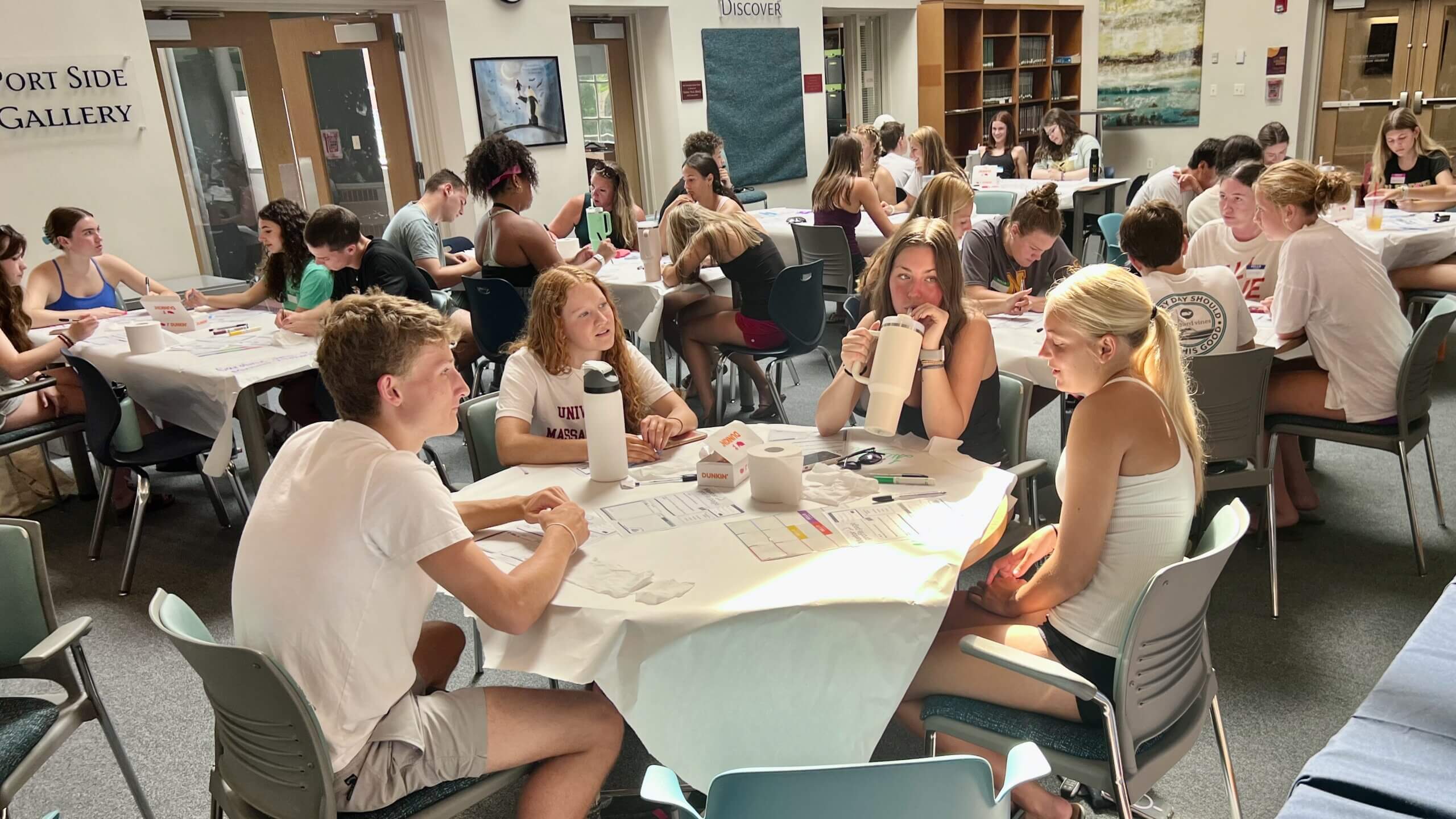
A New Way to Welcome Freshmen: The Rise of Relationship-Based Mentoring
How Lincoln High School Is Rewriting What Peer Mentoring Can Be
Just outside Ann Arbor, in Ypsilanti, Michigan, Lincoln High School has always taken pride in welcoming new students. For years, their Link Crew program helped freshmen feel seen as they entered high school—orientation days, welcome events, and upperclassmen leaders cheering them on.
But over time, a deeper question surfaced:
What happens after the first day of school? Who is still checking in once the balloons are gone and the schedules are set?
Lincoln didn’t just want a strong welcome event. They wanted a year-long web of support where every freshman had someone in their corner.
So, they made a bold shift:
From event-based orientation → to relationship-based peer mentoring.
From “We welcome you” → to “You have an advocate all year long.”
The Shift: From Orientation to Advocacy
Traditional orientation models are powerful—but often short-lived. Students get hyped up, learn where the bathrooms are, maybe meet a few older students, and then… school starts. The energy fades. The relationships don’t always stick.
Lincoln leaders saw the gap.
They didn’t want mentorship to be a one-time moment. They wanted it to be a structure of belonging students could count on.
So they began to redesign their approach:
-
Every freshman would be paired with a peer mentor, not just for a day, but for an entire year.
-
Mentors wouldn’t just run activities; they would build relationships, check in, and become a consistent point of connection.
-
The focus expanded from “getting students started” to walking with them through the messy middle of freshman year—socially, emotionally, and academically.
What the Data Says: Belonging Isn’t a Feeling—It’s an Outcome
In the first year of this reimagined peer mentoring model, Lincoln didn’t just hope it worked—they measured it.
Students were asked about their experiences with their mentors, and the results were striking:
-
94.1% of freshmen said their mentor influenced them to do well in school.
-
67% said that after just two sessions, they felt comfortable seeking support.
Those aren’t just “nice to know” numbers. They tell a story:
-
Freshmen aren’t just hearing that people care—they believe it.
-
Trust is being built quickly and intentionally.
-
Mentors aren’t just facilitators of activities—they’re seen as real advocates.
In a time when many schools are wrestling with disengagement, isolation, and students feeling invisible, these belonging indicators are a big deal.
Year Two: Watching Disengaged Students Lean Back In
Now in Year Two, the impact isn’t just in the data—it’s visible in the hallways and classrooms.
-
Students who once sat quietly at the edge of the room are showing up differently when their mentor is in the space.
-
You see mentees leaning in during conversations, asking their mentors questions, and participating in ways that weren’t there before.
-
Some of the students who used to drift—late to class, heads down, hard to reach—are now more grounded because someone is checking on them by name, on purpose, regularly.
The transformation isn’t that every class is suddenly perfect. It’s that students who might have slipped through the cracks now have a relational safety net.
When Adults Tap Out, Students Step In
One of the most powerful parts of Lincoln’s story isn’t just what mentors do—it’s who they’re becoming.
In a season when many adults in education are stretched thin and sometimes understandably exhausted by the constant waves of change, leadership, behavior, and new initiatives, something incredible is happening at Lincoln:
Students are stepping in with grace, courage, and determination.
Lincoln’s mentors are:
-
Choosing to show up early or stay late to connect with their mentees.
-
Checking in on students who are struggling, not because they have to, but because they care deeply.
-
Learning to ask real questions, listen to real answers, and follow up when it matters.
They’re not just “student leaders” in title—they’re quietly becoming the glue that holds many students’ school experience together.
From “I Go Here” to “I Belong Here”
That’s the real story at Lincoln.
Peer mentoring is no longer just a leadership elective or a fun orientation program. It’s:
-
A belonging system, where every freshman has someone watching out for them.
-
A pathway to advocacy, where students learn to speak up for themselves and others.
-
A culture shift, where “We care about you” isn’t a slogan—it’s a structure.
When freshmen say things like:
-
“My mentor helped me feel like I’m not alone here.”
-
“I know who I can talk to if something is going on.”
-
“My mentor makes me want to do better.”
…you’re not just hearing appreciation—you’re hearing the roots of pride forming. Pride in themselves. Pride in their relationships. Pride in their school.
Lessons for Other Schools
Lincoln’s journey offers a roadmap for other schools ready to move from “welcoming” to truly holding students:
-
Don’t stop at orientation.
The first day matters—but so does week 10, month 5, and the last stretch of the year. -
Give every student an advocate.
Not just access to a program, but a person—a mentor who knows their name, story, and goals. -
Measure belonging on purpose.
Ask students directly:-
Do you feel like you belong here?
-
Do you have someone you can go to?
Then let the responses guide your next steps.
-
-
Trust students with real leadership.
When you equip and trust them, students don’t just follow the culture—they shape it.
The Story Lincoln Is Writing
Lincoln High School is still writing this story. There are new classes of freshmen every year. New mentors. New challenges. New chances to get it right.
But one thing is clear:
This is no longer just a school that welcomes students.
It’s a school that says:
You don’t just go here. You belong here. And you will not walk this year alone.
And that kind of belonging?
It doesn’t just change a student’s day. It changes their trajectory.