
More Than Inclusion
How Mentorship at Lakes High School is Creating Meaningful Leadership Opportunities for Special Education Students
At Lakes High School, mentorship is not viewed as a one-size-fits-all experience. It is a living system built around relationships, adaptability, and the belief that every student deserves meaningful opportunities to lead, belong, and connect.
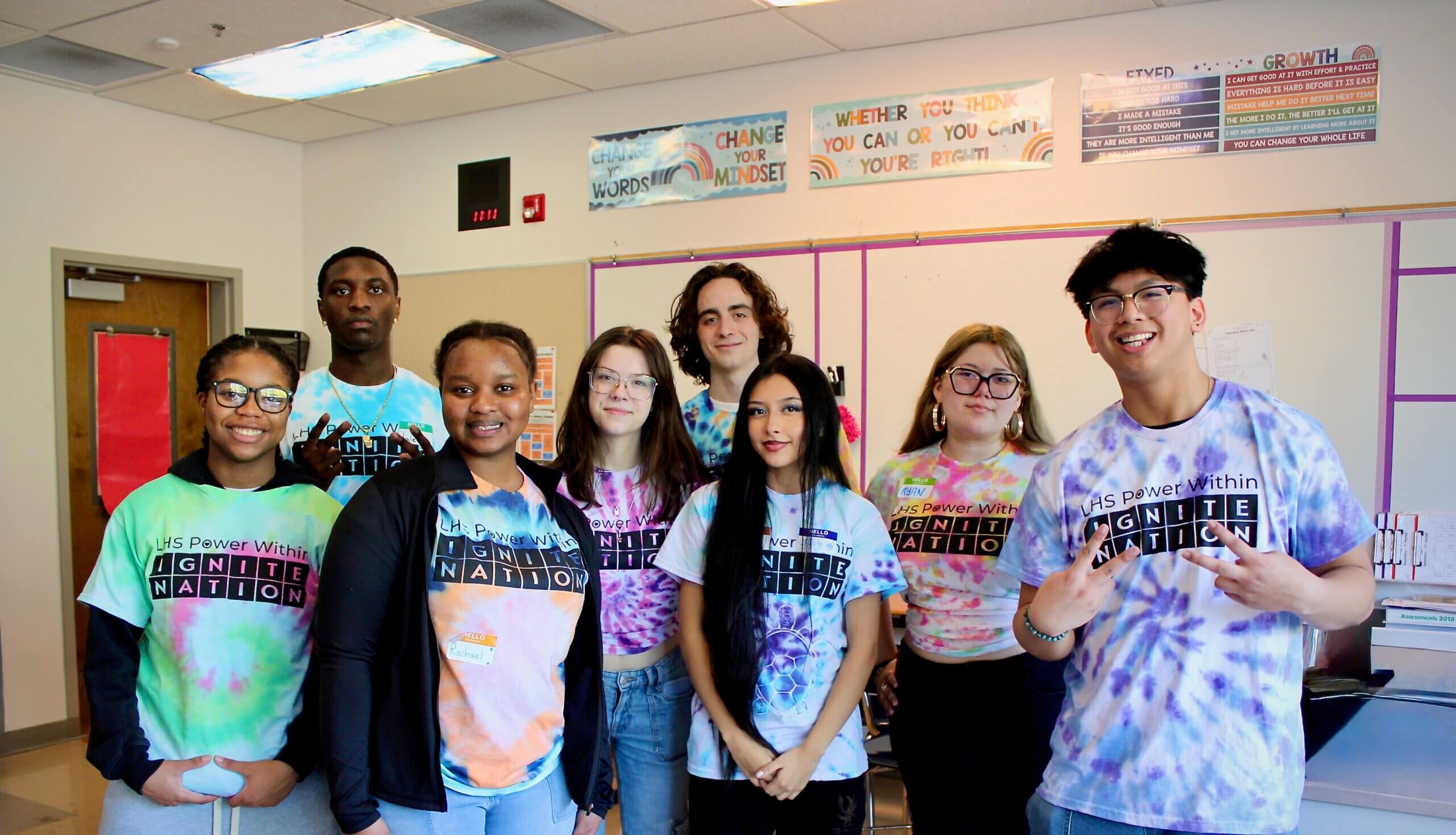
Inside the school’s Ignite CTE Leadership class, Executive Mentor Ryan and her team of student mentors are helping bring that belief to life in powerful ways.
Together, they are intentionally adapting & designing mentoring experiences that support students receiving special education services not by lowering expectations, but by thoughtfully adapting how connection, leadership, and engagement are cultivated.
This work is deeply personal, but it is also deeply educationally grounded.
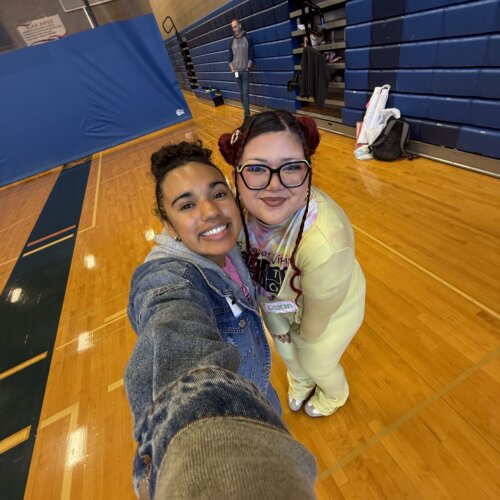
Executive Mentor Ryan and Ignite Coach Ali Pose for a Picture at LHS Annual Power With Day.
The mentors spend time planning, preparing, and reflecting on how to best support the individual needs of each student. They adapt mentoring lessons, personalize activities, and intentionally tap into students’ funds of knowledge; the lived experiences, interests, strengths, identities, and passions students already carry with them into the room.
For some students, that may mean connecting through shared hobbies or routines. For others, it may mean adjusting communication styles, providing additional structure, creating visual supports, or simply slowing down long enough to build trust and emotional safety.
What makes this process so meaningful is that students themselves are learning how to think relationally.
They are learning to ask:
- What does support actually look like for this person?
- How do we create belonging, not just participation?
- How do we adapt without diminishing dignity?
- How do we notice the human being in front of us?
These are not just mentoring skills, these are life skills; leadership skills, future workplace skills, deeply human skills.
And perhaps most importantly, these are skills that often cannot be fully taught through lecture alone. They are developed through authentic interaction, reflection, empathy, and practice.
Research consistently reinforces the power of peer connection and belonging within school systems, particularly for students who may otherwise experience isolation or disconnection. Structured peer mentoring opportunities can support social confidence, school engagement, communication development, and emotional safety while also strengthening empathy, leadership capacity, and perspective-taking for student mentors themselves.
But beyond the research, there is something even more powerful happening here.
Students are learning that leadership is not about being the loudest voice in the room. It is about learning how to see people.
At Ignite schools across the country, adaptive mentoring and inclusive relationship-building have been part of mentoring systems since the early 2000s. Again and again, schools are reminded of the same truth:
Connection matters.
Care matters.
Simply showing another student that someone notices them, values them, and is willing to walk alongside them can create immeasurable impact.
And what makes the work happening at Lakes so special is not that it is rare. It is that it is possible.
Possible when schools invest in structures that empower students to support one another.
Possible when mentorship becomes embedded into the culture of a school day.
Possible when educators trust students with meaningful responsibility.
Possible when leadership is redefined as service, empathy, adaptability, and connection.
Ryan and her mentor team are not just facilitating mentoring sessions.They are helping build a culture where students learn how to meet the needs of others with creativity, dignity, and compassion.
In many ways, there may be no more meaningful form of inclusion than this: Students learning how to truly know, support, and advocate for one another through authentic relationships.
Because sometimes the most powerful intervention a school can create is not a program.
It is a student looking another student in the eyes and saying:
“You belong here.”