
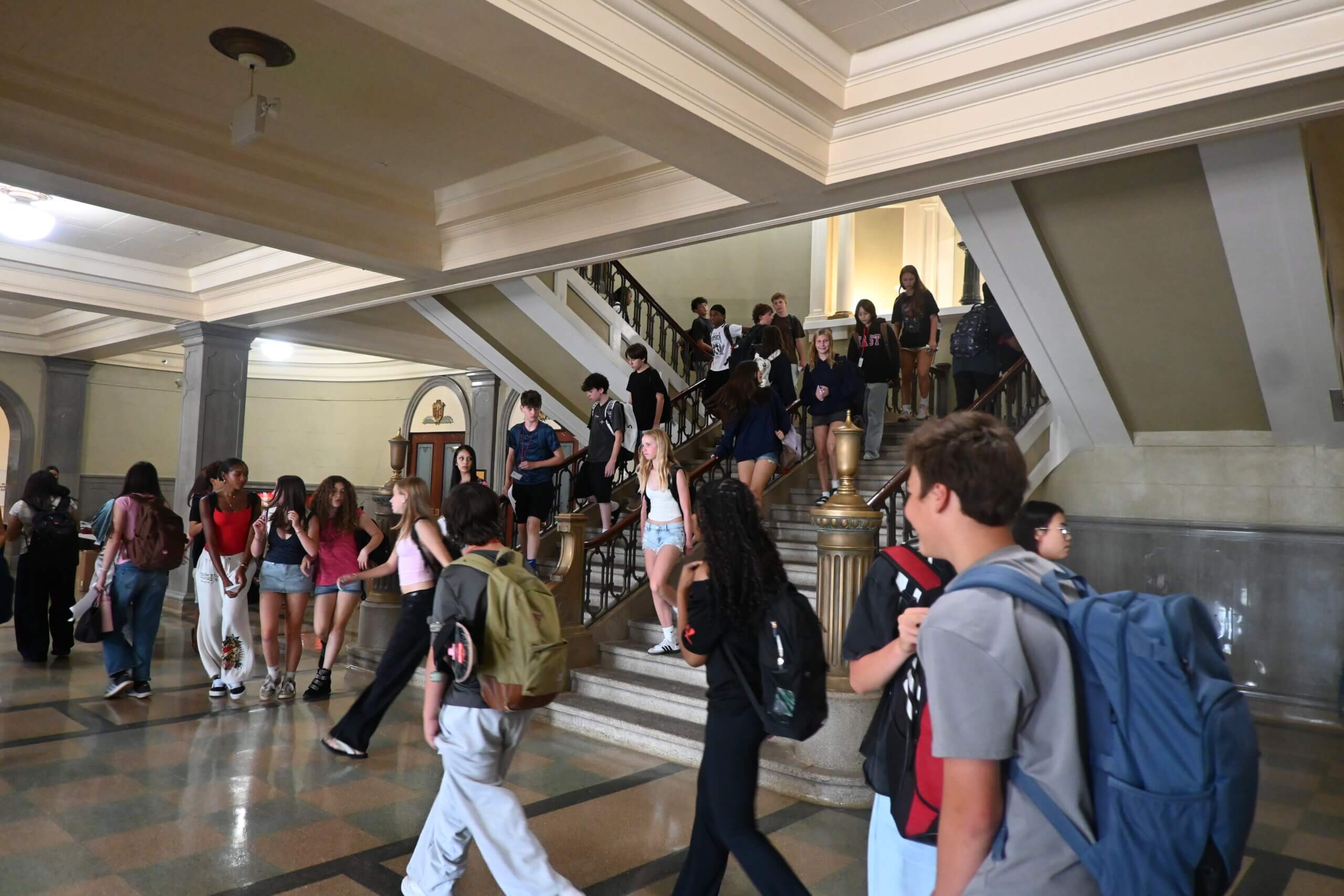
What if 25% of Your School Was Part of Your MTSS Team?
How peer mentoring can strengthen schoolwide systems, expand capacity, and turn student leadership into a powerful lever for change.
What if one of the greatest untapped resources in your school’s Multi-Tiered System of Supports (MTSS) was already sitting in your classrooms?
Across the country, schools are investing significant time, expertise, and resources into strengthening student outcomes. They’re refining instructional practices, analyzing attendance and behavioral data, developing interventions, and building increasingly sophisticated systems to identify students who need additional support.
Yet even in schools doing so much right, students can still fall through the cracks.
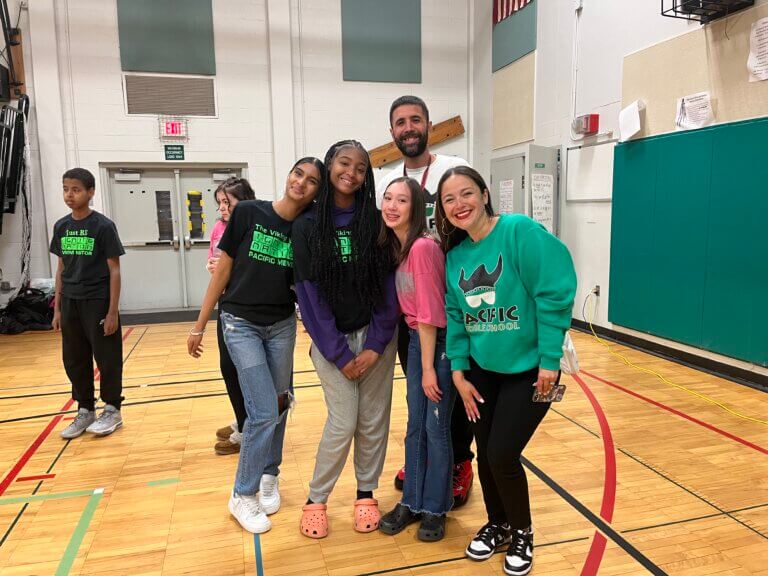
Middle school mentors partner with administrators to introduce sixth graders to school Touchstones and expectations, bringing them to life through hallway modeling, lessons, and everyday conversations.
Some are chronically absent. Others are physically present but behaviorally or emotionally disengaged. Some have access to exceptional educational opportunities but struggle to connect with the people, habits, or sense of belonging that help them take full advantage of those opportunities.
It’s a challenge familiar to educators everywhere: We know what students need, but how do we build the capacity to consistently deliver it?
What if we started by rethinking who gets to be part of the solution?
The Research: Relationships as a Lever for Student Success
The case for mentoring extends beyond the belief that relationships matter. Research increasingly helps us understand how intentional, structured mentoring can contribute to student development and school connectedness.
A 2022 meta-analysis published in the American Journal of Community Psychology, coauthored by Dr. Jean Rhodes of the University of Massachusetts Boston, examined cross-age peer mentoring and found a medium-sized overall positive effect (g = 0.45). Importantly, programs with moderate to high levels of adult oversight and supervision demonstrated stronger effects.
The takeaway? The power of peer mentoring is not simply putting students together. It’s equipping them to build relationships with purpose, consistency, and support.
A 2025 systematic review and meta-analysis of school connectedness interventions also identified curriculum-based and mentoring approaches as promising ways to strengthen belonging, connection, and engagement.
Research does not suggest that mentoring alone will solve chronic absenteeism or eliminate behavioral challenges. It does, however, point toward an important opportunity: when relationships are intentionally developed within a larger system of support, they can help address the conditions that influence students’ ability to engage and succeed.
And that brings us back to MTSS.
What if Mentoring Had a Place in Every Tier?
MTSS is built on a powerful premise: Every student deserves access to high-quality universal support, with increasingly targeted and intensive interventions available as needs emerge.
Tier 1 | Every Student Has Someone
Every student has access to a trained peer mentor. Someone who knows their name, helps them navigate challenges, celebrates their successes, and provides a consistent point of connection throughout the year.
Peer mentors become part of the schoolwide culture of belonging, reinforcing expectations, encouraging engagement, and helping students build the relationships that make school feel like a community.
Tier 2 | Targeted Mentoring With Purpose
For students who need additional support, mentoring becomes more intentional. Structured lessons, targeted interventions, regular check-ins, and progress monitoring help address specific goals related to attendance, academic confidence, behavior, or engagement.
Students receive additional support while remaining connected to the broader school community. Trained mentors reinforce the work of educators, with adults guiding interventions and monitoring student progress.
Tier 3 | Equipping Adults for Intensive Support
Students with the greatest needs benefit from trained adults who can provide consistent, individualized, relationship-centered support.
Professional learning in areas such as youth mental health, supportive accountability, motivational interviewing, and resilience equips educators with additional tools to engage students experiencing significant challenges. This mentoring complements specialized interventions and services already in place.
Across all three tiers, mentoring creates another avenue for connection, reinforcement, and early identification of emerging needs.
Now imagine a quarter of your student body equipped to contribute to that work.
Not replacing teachers, counselors, or interventionists, but becoming a trained, supported extension of the school community. More students noticing when someone is missing. More opportunities to practice kindness, responsibility, and encouragement. More relationships reinforcing the goals educators are already working toward.
That’s capacity building.
From Strong Schools to Stronger Systems: A Story From Long Island
At Plainview–Old Bethpage Central School District on Long Island, New York, school leaders were asking a similar question. The district had already invested in robust educational practices and systems of support. Academic achievement was strong, and staff were implementing sophisticated strategies to meet student needs. Yet their MTSS work revealed an important gap.
Despite the quality of the education available, some students were still struggling to access it fully.
Chronic absenteeism, behavioral disengagement, and other barriers to participation remained challenges, even within an otherwise high-performing educational environment. The question wasn’t simply how to add another intervention. It was how to strengthen the reach and impact of the work already underway. That’s where Ignite Nation entered the conversation.
District leaders began exploring how a structured, yearlong peer mentoring system could help connect their existing initiatives, expand the number of people contributing to student success, and create meaningful opportunities for students to take ownership of their school community.
During two days of Ignite’s Staff Compass training, an exciting realization began to emerge. The qualities educators had been working to develop across classrooms, initiatives, and schoolwide expectations—integrity, kindness, adaptability, relationships, responsibility, and community—could have a shared home. Peer mentoring could become the place where students practice the very character and leadership skills their schools were working so hard to teach.
Rather than introducing another disconnected initiative, mentoring offered a way to bring existing priorities together. Academic success, belonging, character development, student engagement, and leadership could reinforce one another through a common structure.
It also opened the door to a broader definition of student leadership.
Leadership That Looks Like the Community It Serves
One of the most exciting possibilities emerging from Plainview–Old Bethpage’s work is the opportunity to rethink who gets to lead. Traditionally, student leadership opportunities can gravitate toward the most visible students: those who already hold office, excel academically, or confidently volunteer for responsibility. But leadership takes many forms.
The quiet student who notices when someone is left out. The student who has overcome significant challenges and can offer perspective to someone navigating a similar experience. The student whose compassion, patience, humor, or ability to connect with others makes them an extraordinary mentor. A schoolwide mentoring system creates space to recognize, develop, and celebrate these different strengths.
And if peer mentors are going to support the entire school community, the students serving as mentors should reflect the diversity of learners, experiences, and perspectives within that community.
That’s more than representation. It’s an opportunity to develop agency, strengthen relationships across social groups, and help students recognize that leadership is something they can practice, regardless of their starting point.
The goal is not simply to find more student leaders. It’s to develop more students who see themselves as capable of leading.
Building Something That Lasts
For Plainview–Old Bethpage, this journey is only beginning, and the long-term vision extends well beyond mentoring sessions.
As the district explores the implementation of a Career and Technical Education (CTE) aligned leadership course, students could have the opportunity to study leadership in the classroom and apply those skills through authentic mentoring responsibilities.
Imagine a student learning about communication, collaboration, adaptability, and critical thinking, then putting those competencies to work while helping a younger student navigate the school year. Add meaningful leadership and mentoring certifications, opportunities to demonstrate graduation-related competencies, and authentic work-based learning experiences, and the impact extends beyond immediate school improvement goals. Students gain experiences and credentials that can support their future pathways, whether they pursue education, healthcare, engineering, business, or another field entirely.
At the same time, the district builds internal capacity. Staff develop the expertise to train and support mentors, students gain the skills to serve one another, and mentoring becomes an increasingly sustainable part of the school culture. This is the kind of partnership Ignite believes in:
investing in people, strengthening existing systems, and building the capacity for schools to sustain the work long after the initial training.
The first two days of Staff Compass training offered a glimpse of that potential. The next chapter is putting the vision into practice, refining the system, and measuring how mentoring contributes to the district’s MTSS priorities.
Lifting as We Climb
There is something powerful about viewing education not only as something students receive, but as a community they help build.
We often talk about preparing students to become contributing members of society. What if we gave them meaningful opportunities to contribute right now?
When we equip students with the skills, responsibility, and support to help others succeed, we do more than expand our school’s capacity. We develop agency. We strengthen character. We create opportunities for students to experience the value of service and the responsibility that comes with belonging to a community.
And we remind students that their success and the success of those around them are connected.
What if a quarter of your school became part of your MTSS team? What if every student had someone looking out for them, and every mentor understood the difference they could make?
That’s the opportunity in front of us. When we lift as we climb, we build communities where more students can access the education, relationships, and opportunities they deserve. And when students thrive, schools thrive. When schools thrive, communities grow stronger.
Follow Along: Plainview–Old Bethpage’s Journey With Ignite
We’re excited to follow Plainview–Old Bethpage Central School District as they work to bring this vision to life, connecting peer mentoring, student leadership, and their MTSS goals through a sustainable system of support.
From staff development to student leadership opportunities, certification pathways, and measurable student outcomes, we’ll share what we’re learning as the partnership develops.
Next up: Mentor Training Camp! Follow along as Plainview–Old Bethpage’s students prepare to step into their roles as mentors and help shape the next chapter of their school community.