

Performance Readiness
5 Test-Day Strategies That Help Students Show What They Know
State testing season can bring pressure, nerves, and a long list of reminders. But students do not just need more reminders. They need tools.
Testing is not only about what students know. It is about whether they can access their learning, stay focused, manage stress, and make clear decisions in the
moment. That skill is called performance readiness.
Here are five simple strategies teachers can share with students before assessment season begins.
1. Train Like It’s Real
When studying or practicing, try to match the testing environment as much as possible: quiet space, independent work, limited distractions, and timed practice.
Familiar conditions help train the brain. Research on context-dependent memory suggests that recall can improve when the learning environment and testing environment are similar. In the classic Godden and Baddeley study, participants remembered more when the learning and recall environments matched. While a classroom is very different from the study’s original setting, the takeaway is useful: practicing in conditions that feel closer to the real test can help students feel more prepared and less surprised by the testing environment.
Practice prepares you for the game. Study in a way that helps test day feel familiar.
2. Decode the Question
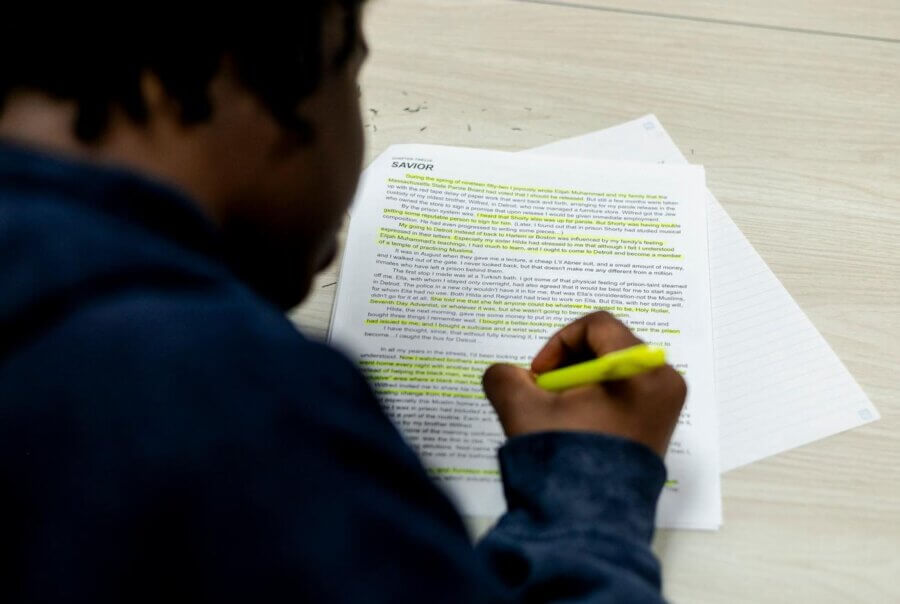
Go back to the basics: read carefully. Circle, underline, highlight, or note key parts of the question. Do not rush past the question, because the question tells you exactly what to do.
Many missed answers come from misreading what is being asked, not from a lack of knowledge. Slowing down to identify the task, key words, and evidence needed helps students shift from guessing to thinking. This connects to cognitive load: when students organize the question before answering, they reduce mental clutter and give their working memory a clearer path for problem-solving.
The question is not in your way. The question is your guide.
3. Control Your Pace, Control Your Mind
If you feel overwhelmed, close your eyes and pause for 10 seconds. Take one slow breath. Reset. Then return to the question in front of you.
Stress can interfere with working memory, which is the mental space students use to hold information, reason through problems, and make decisions. Research on test anxiety consistently shows that anxiety can disrupt performance by pulling attention away from the task and making it harder to think clearly. Even a brief pause can help students interrupt that stress response and return to focused thinking.
A calm brain thinks more clearly. You can pause and come back with more clarity than before.
4. Build Momentum
Start with what you know. Early success helps your brain lock in and builds confidence for harder questions.
This strategy matters because confidence and retrieval work together. Research on retrieval practice shows that pulling information from memory strengthens learning and improves long-term retention.
On test day, answering familiar questions first can help students activate what they know and build a sense of forward motion.
5. Finish Strong
Checking your work is not extra. It is essential.
Students should scan for mistakes, reread key questions, and verify that their answers match what was asked. This is not about second-guessing every answer. It is about double-checking with purpose.
Research on test-enhanced learning reminds us that testing is not just a measurement tool; it is also a thinking process.
When students review with intention, they re-engage with the task, notice mismatches, and catch avoidable errors.Do not just finish. Verify. Small corrections can protect the work you already did.
One Final Thought
Assessment season is not about students becoming perfect test takers. It is about helping them become performance-ready learners.
When students know how to prepare, focus, reset, and review with intention, they are better equipped to do what testing actually asks of them:
Show what they know.