
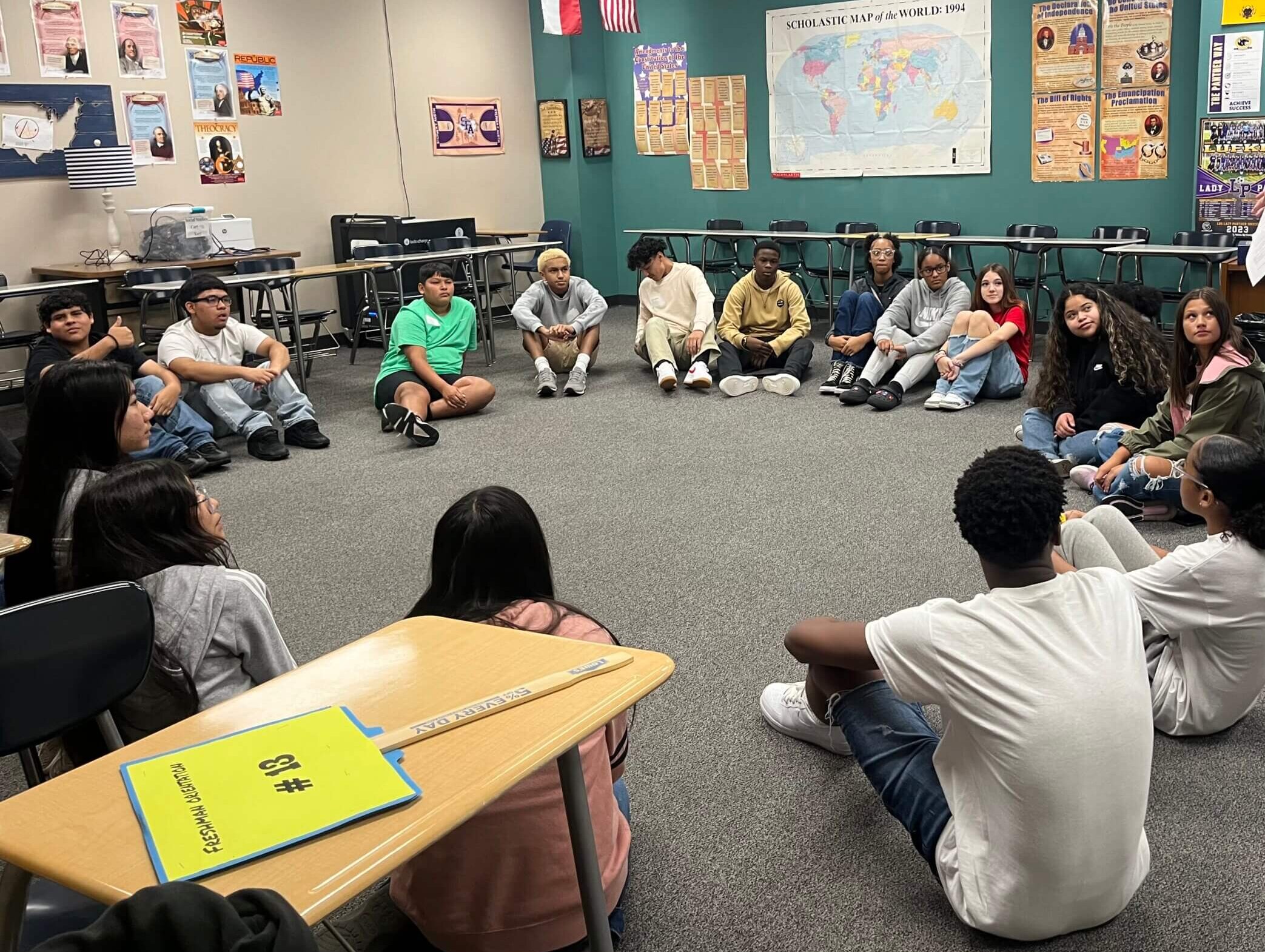
Why Seated on the Floor?
5 Reasons we sit in Circles on the Floor
At Ignite Nation, we don’t just talk about connection—we sit with it. Literally. Every mentoring session finds its way to a small circle, seated on the floor. What usually begins with a few eye rolls quickly transforms into something powerful. Sitting in a circle strips away hierarchy, builds trust, and creates a culture of confidence, conversation, and connection like no other.
Here’s why we choose to sit on the floor—and why it works.
Psychological Safety
Everyone’s on the same level—literally. No one is towering over anyone else, which reduces perceived hierarchies. When students and mentors share the same physical space, it helps break down barriers and builds the trust needed for honest  conversation (Edmondson, 2019).
“School actually feels real for once.” — Middle School Mentor, FL
Encourages Active Listening
A circle setup naturally promotes eye contact and attentive listening. It’s easier to pick up on body language and non-verbal cues, which often communicate just as much as words. In restorative practices, circles are frequently used to model respect and ensure every voice is heard (Riestenberg, 2012).
 Tip: If students are shy at first, you can build comfort by starting with light, low-stakes check-in questions—like “What’s your favorite snack?”—before moving into deeper topics.
Fosters Honest Dialogue
Sitting in a circle feels less formal than desks or panels, making conversations feel more authentic. People are often more willing to open up and be vulnerable in a comfortable setting (Wachtel, 2016).
“I’ve had her for two years in my class, and she never spoke up. Now she’s taken on a new form—I’m almost shocked. I’m so happy to see HER now, it warms my heart.” — Junior English Teacher, MI
Tip: Some students may groan or resist sitting on the floor at first. Acknowledge it with humor and normalize the discomfort. Over time, those same students often become the ones who lean in most.
Relaxed Body, Relaxed Mind
Physically being closer to the ground can lower stress levels and help people feel more grounded (Peper & Lin, 2012). The posture itself signals that this is a conversation, not a performance. A circle reminds us that presence is what matters most, not perfection.
Community Vibe
Circles symbolize unity and equality, which is ideal for mentoring environments where collaboration and mutual growth are key. Whether you’re leading the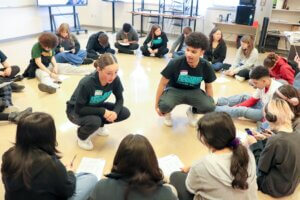 discussion or just finding your voice, riding a high or navigating something new—there’s always a seat for you.
“I actually connected with some of my classmates I never even thought about talking to.” — High School Mentor, WA
No table required. Just the floor, some open minds, and the kind of culture that brings people together from the ground up.
References
Edmondson, A. C. (2019). The fearless organization: Creating psychological safety in the workplace for learning, innovation, and growth. Wiley.
Peper, E., & Lin, I. M. (2012). Increase or decrease depression: How postures affect moods. Biofeedback, 40(3), 125–130. https://doi.org/10.5298/1081-5937-40.3.02
Riestenberg, N. (2012). Circle in the square: Building community and repairing harm in school. Living Justice Press.
Wachtel, T. (2016). Restorative circles in schools: Building community and enhancing learning. International Institute for Restorative Practices.